
Sydney’s Flood Risks: What Commercial Property Owners Need to Know
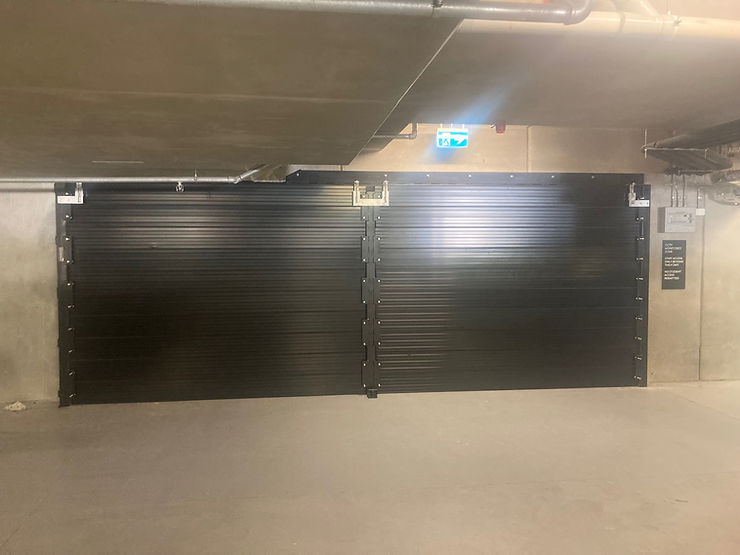
For commercial property owners, managing flood risks in Sydney has shifted from a distant contingency plan to a pressing operational and financial imperative. Intense rainfall, overland flow, river flooding, and local drainage limitations mean water ingress constantly threatens commercial viability. Implementing proactive flood protection for your business is vital for safeguarding physical assets and maintaining long-term financial stability.
To navigate Sydney flood risks effectively, property owners must understand how local weather patterns and topography interact with urban infrastructure. Understanding how flooding impacts your specific premises and what engineered solutions are available is critical to protecting your enterprise.
The Operational & Financial Impact of Commercial Flooding
When floodwater breaches a commercial building, the consequences are swift and severe. Water ingress damages stock, destroys raw materials, short-circuits electrical infrastructure, and ruins expensive machinery. Beyond the immediate physical assets, flooding can compromise structural elements such as drywall, flooring, and elevator pits, leading to costly structural repairs.
Prolonged Downtime & Access Issues
Physical destruction is often only a portion of the total loss. Flooding creates severe access challenges, blocking surrounding roads and preventing employees, delivery vehicles, and customers from reaching your site. Furthermore, floodwaters often carry heavy contamination, including sewage, chemicals, and mud, creating hazardous health conditions that require extensive remediation.
These factors result in prolonged business interruption. A commercial site facing severe water ingress can be forced offline for weeks or months while undergoing drying, decontamination, and rebuilding. Effective commercial flood protection is designed specifically to prevent these extended operational stoppages.
Sydney’s Core Flooding Mechanisms
Sydney’s urban layout and geography mean flooding occurs in several distinct ways. Because risk exposure varies substantially from property to property, presenting a fixed list of "high-risk suburbs" is misleading. A property’s actual risk depends on local contours, drainage infrastructure, and nearby watercourses. Comprehensive flood mitigation planning in Sydney requires understanding these distinct mechanisms:
Intense Rainfall & Local Drainage Limitations
Sydney frequently experiences high-intensity storm events where extreme rainfall falls in a short timeframe. During these downpours, municipal stormwater systems can quickly reach capacity. Trapped rainwater accumulates on paved surfaces, leading to sudden urban flash flooding around commercial precincts.
Overland Flow & Foreshore Inundation
Overland flow occurs when stormwater runoff travels across land toward lower ground, often cutting across commercial driveways, loading bays, and basement entries. Additionally, commercial properties along coastal zones, harbours, or estuaries face foreshore flooding driven by king tides, storm surges, and elevated ocean levels.
Rapid Catchment Rises Along the Parramatta River
The Parramatta River and its associated tributaries pose localised flash flooding challenges. During heavy downpours, these waterways can experience rapid rises in water levels. Parts of the Parramatta commercial district are particularly exposed to swift flash flooding, giving building managers very narrow warning windows to respond.
Deep Riverine Flooding in the Hawkesbury-Nepean Valley
To the west, the Hawkesbury-Nepean Valley presents one of Australia's most severe riverine flood hazards. Due to unique geographical chokepoints, floodwaters in this catchment back up significantly, leading to extreme flood depths. Effective flood protection for Sydney businesses in this region requires a clear understanding of how modelled flood heights affect specific building levels.
Why Historical Experience is Insufficient for Risk Assessment
A common pitfall for property owners is relying solely on historical experience. Assuming a site is safe simply because it has not flooded in recent decades can lead to a false sense of security. Flood behaviour is dynamic; it evolves alongside rainfall intensity, upstream land development, local drainage upgrades or blockages, and site-specific modifications.
Using Council Flood Studies & Planning Data
Commercial property owners should consult local council flood studies, flood maps, and municipal planning records. This information provides valuable insights into predicted flood depths, velocity, flow paths, and catchment dynamics. If you are evaluating how to reduce flood risk in Sydney for your site, analysing council data is an essential first step.
Identifying Vulnerability Points Across Commercial Facilities
During a site evaluation, property managers should inspect key entry points where water can rapidly enter building envelopes, including:
Basement car park ramps and underground entryways
Loading docks, service bays, and roller doors
Ground-floor shopfronts and pedestrian entrances
Warehouse doorways and emergency exits
Sub-grade plant rooms housing electrical and mechanical services
Air vents, utility ducts, and lower-level building openings
Demountable vs. Passive, Automated Flood Barriers
Selecting the right mitigation strategy depends on site conditions, expected flood depth, warning times, opening widths, and available staffing. When evaluating flood barriers for commercial properties in Sydney, owners generally choose between two primary operational types: demountable barriers and passive, automated systems.
Demountable Flood Barrier Systems
Demountable systems, such as modular aluminium flood planks or flood gates, are installed manually ahead of an expected flood event. These solutions provide flexible protection across wide openings, shopfronts, and driveways. However, they rely on adequate warning time, clear deployment protocols, trained personnel, and dedicated on-site storage.
Passive, Automated Flood Systems
Where flash flooding provides little to no warning, or where facilities are unstaffed after hours, passive and automated systems are superior. Systems like self-closing flood barriers (SCFB™) or automated drop-down flood gates use floodwater buoyancy or sensor controls to deploy automatically. For long-term flood protection at Sydney commercial sites, passive systems deliver fail-safe, 24/7 reliability without human intervention.
Linking Flood Protection to Business Continuity
Installing engineered commercial flood barriers that Sydney businesses count on is an investment in long-term operational resilience. By stopping water ingress at the perimeter, you safeguard valuable inventory, machinery, and critical building services. Preventing water damage dramatically lowers repair costs, simplifies insurance claims, and accelerates post-storm recovery.
When you need reliable commercial flood protection Sydney building managers can trust, choose Flooding Solutions Advisory Group. We offer a proven range of automated, passive, built-in, and demountable flood defence systems engineered for entrances, shopfronts, underground car parks, loading docks, and large industrial openings.
Get in Touch With the Specialists Today
Proactive risk management is the key to weathering severe climate events. Commercial property owners should combine local council flood data with a professional, site-specific assessment to determine their exact flood risk exposure in Sydney. Contact Flooding Solutions Advisory Group today to consult with our specialist engineers and secure the ideal flood protection system for your commercial asset.


Comments